Blog Posts
- FAQ: What does bark do when used as a mulch?
- Bark Coverage Chart
- FAQ: What is an express blower?
- Mulching Trees and Shrubs
- FAQ: What is safety surfacing?
- Overseeding In Autumn
- What Our Customers Say
- Why Winter Mulching is important
- Play Chip: Before and After
- Everything you need to know about Mulching
- Doing up the garden - how to keep busy during lockdown
- Landscaping in Winter
- Planting Bulbs for Spring? Here’s Why You Should Mulch Now
- Preparing Your Garden for Winter: Smart Bark & Mulch Moves
- All About Scotbark – Your Questions Answered
- 5 Creative Uses for Scotbark Bark and Woodchip Products You Haven’t Tried
- The Sensory Garden: Using Texture and Scent to Create a Backyard Sanctuary
- The Benefits of a Trade Account: Why Partner with Scotbark?
- How to Lay Bark Properly (and Mistakes to Avoid)
- How to get your garden Summer BBQ ready
- How to Create a Safe Play Area in the Garden
- Tips to Get Your Garden Ready for Autumn
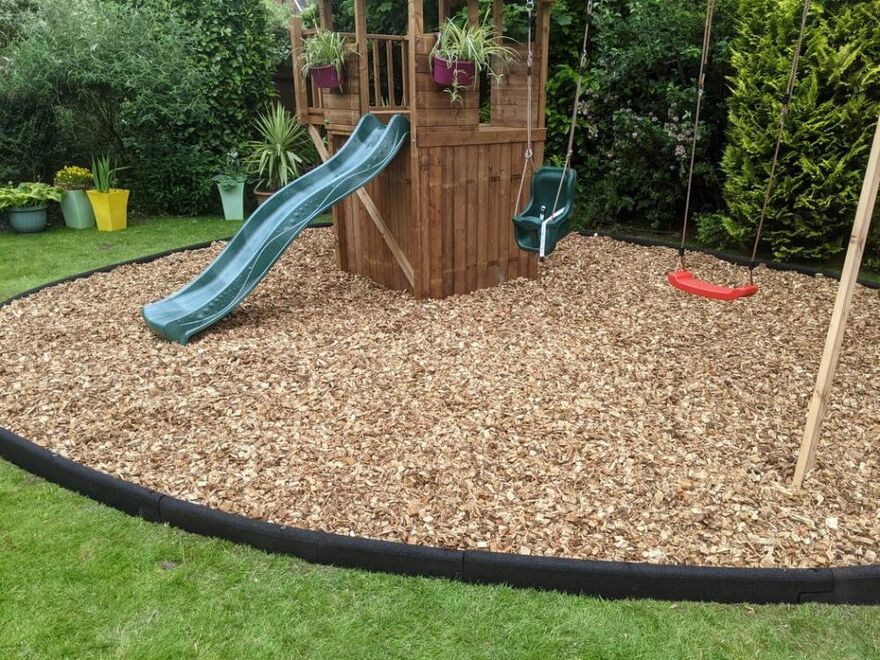
How to Create a Safe Play Area in the Garden
A garden play area gives children the freedom to run, dig, climb and imagine, without you having to watch every single step.
But a safe play space doesn't happen by accident.
From the ground beneath their feet to the plants at the border, a few thoughtful choices make the difference between a garden that's fun and one that's fun and safe.
Whether you're starting from scratch or improving an existing space, here's how to plan a garden play area that gives children room to explore with confidence.
Choose the right spot
Start by picking a location that's easy to see from the house, ideally from a kitchen or living room window, so supervision is simple even when you're indoors. Keep the area away from:
- Ponds, water butts or hot tubs
- Driveways, gates and roads
- Sheds, greenhouses or areas where tools and chemicals are stored
- Overhanging branches, unstable fencing or uneven ground
A flat, well-drained spot works best. It reduces the risk of trips and means the area won't turn into standing water after rain.
Get the safety surfacing right
The surface under play equipment does more work than any other single feature in the play area.
According to Royal Society for the Prevention of Accident (RoSPA), head injuries account for around half of all playground-related hospital visits.
While safety surfacing isn't a legal requirement for private gardens, it's widely recommended by RoSPA, the BSI and industry safety bodies as best practice under and around anything children can fall from.
The two figures that matter are:
Critical fall height (CFH): the maximum height a surface is tested to protect against, per BS EN 1177
Depth: how thick the surfacing layer needs to be to absorb that fall safely
Pine Play-grade bark and wood chip, such as Scotbark's Play Bark and Play Chip, are manufactured and tested to BS7188 and BS EN 1177, unlike general-purpose garden bark, which isn't rated for impact absorption.
As a guide:
- Lay a minimum depth of 100mm (around 4 inches) under and around play equipment
- One cubic metre of play bark or chip covers roughly 10m² at that depth, so measuring the area (length x width x depth) beforehand avoids under-ordering
- Pine Play Bark gives a softer, cushioned feel and suits most family gardens; Play Chip is denser and more hard-wearing, useful for areas that get heavy use
- Play Sand is a good option for sandpits and shallower play features
All three are FSC-certified, so the material is sustainably sourced as well as safety-tested.
For larger areas, Scotbark's Express Blower service can install 10m³ or more directly and evenly.
This is worth considering if you're covering a big garden or a play area for a nursery or community space.
Check play equipment regularly
New or second-hand climbing frames, swings and slides should be assembled exactly to the manufacturer's instructions, anchored securely, and checked periodically for:
- Loose bolts, splinters or rust
- Worn ropes, chains or fixings
- Stability after storms or ground movement
It's easy to forget equipment that's been sitting through winter. A quick check before the first spring or summer play session catches most problems early.
Fence off water, plants and chemicals
RoSPA is clear that young children can drown in very small amounts of water, so ponds, water butts and paddling pools need covering, fencing or emptying when not in direct use.
A few other checks worth making around the play area:
- Remove or fence off poisonous plants that might tempt small children, such as yew, laburnum and foxgloves
- Store garden chemicals, fertilisers and tools in their original, labelled containers, out of sight and reach, ideally in a locked shed or elevated cupboard
- Keep barbecues and fire pits well away from the play area, and remember the ground beneath them can stay hot long after use
Think about shade, drainage and weather
UK weather can swing from downpours to strong summer sun within the same week, so a garden play area needs to cope with both.
A tree, pergola or shade sail over part of the space helps protect against sunburn on hot days.
Good drainage, helped by a permeable surface like play bark rather than solid paving, stops the area becoming waterlogged and slippery after rain.
Match the space to your children's ages
A play area designed for a toddler looks different to one built for a ten-year-old.
Lower platforms, soft landings and enclosed sandpits suit younger children, while older children can usually handle taller equipment, provided the surfacing underneath is rated for the greater fall height.
If children of different ages share the space, plan zones so smaller ones aren't near equipment that's built for bigger kids.
Maintain it through the year
A safe play area needs occasional upkeep to stay that way:
- Rake play bark or chip periodically to keep it evenly spread and free of debris
- Top up surfacing depth as it settles or decomposes, typically every two to three years
- Re-check fencing, gates and equipment fixings each season
- Clear leaves and moss from paths and patios near the play area to prevent slips
Frequently asked questions
Is safety surfacing a legal requirement for a home garden play area?
No. It isn't a legal requirement in private gardens, but RoSPA, the BSI and other safety bodies recommend it as best practice under and around play equipment. It significantly reduces the severity of fall-related injuries.
How deep should play bark be for a garden play area?
A minimum of 100mm (4 inches) is the general guide for play-grade bark or chip tested to BS7188 and BS EN 1177. Taller equipment with a higher critical fall height may need a deeper layer.
What's the difference between play bark and play chip?
Pine Play bark comes from the outer layers of the tree and has a softer, cushioned feel. Play chip comes from the inner wood, is lighter in colour and more hard-wearing, so it suits areas with heavier footfall.
How often does play bark need replacing?
Most gardens need a top-up every two to three years as the material naturally breaks down. A quick rake every so often keeps it level in the meantime.
Ready to build a safer play area?
A safe garden play area comes down to a handful of good decisions: the right location, the right surfacing at the right depth, and a bit of regular upkeep.
Scotbark supplies FSC-certified, BS7188 and BS EN 1177 tested Play Bark, Play Chip and Play Sand for gardens of any size, with bulk delivery and installation available through the Express Blower service for larger projects.
Landscapers and contractors can also set up a trade account for ongoing supply.
Browse Scotbark's safety and play surfacing range or get in touch to talk through what your garden needs.
