Blog Posts
- FAQ: What does bark do when used as a mulch?
- Bark Coverage Chart
- FAQ: What is an express blower?
- Mulching Trees and Shrubs
- FAQ: What is safety surfacing?
- Overseeding In Autumn
- What Our Customers Say
- Why Winter Mulching is important
- Play Chip: Before and After
- Everything you need to know about Mulching
- Doing up the garden - how to keep busy during lockdown
- Landscaping in Winter
- Planting Bulbs for Spring? Here’s Why You Should Mulch Now
- Preparing Your Garden for Winter: Smart Bark & Mulch Moves
- All About Scotbark – Your Questions Answered
- 5 Creative Uses for Scotbark Bark and Woodchip Products You Haven’t Tried
- The Sensory Garden: Using Texture and Scent to Create a Backyard Sanctuary
- The Benefits of a Trade Account: Why Partner with Scotbark?
- How to Lay Bark Properly (and Mistakes to Avoid)
- How to get your garden Summer BBQ ready
- How to Create a Safe Play Area in the Garden
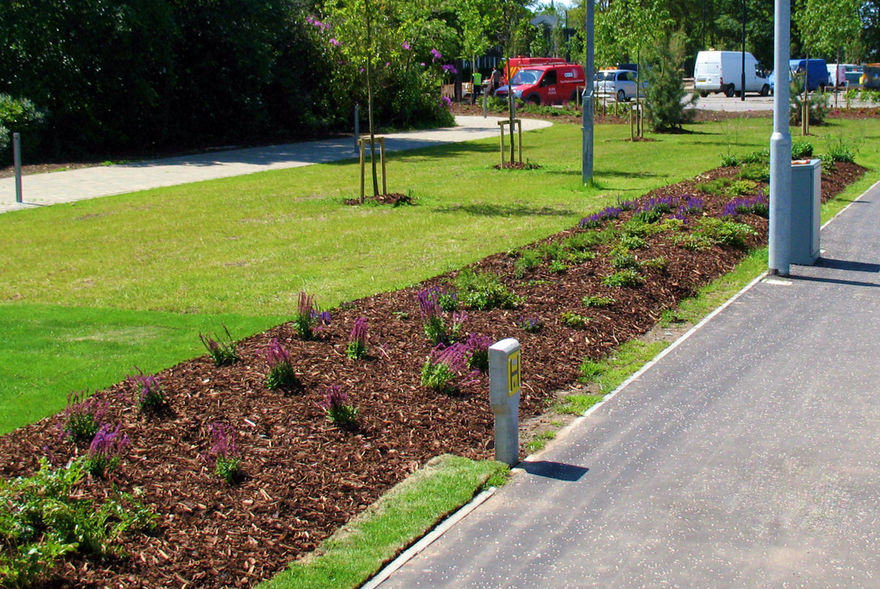
How to Lay Bark Properly (and Mistakes to Avoid)
Bark is one of the most effective and versatile materials available to gardeners and landscapers.
When applied correctly, it suppresses weeds, retains moisture, regulates soil temperature, and gives any outdoor space a clean, professional finish.
But get it wrong, and you can end up with a patchy, ineffective layer that causes more problems than it solves.
Here is everything you need to know about laying bark properly and the most common mistakes to steer clear of.
Prepare the Ground First
The single most important step is ground preparation.
Before laying any bark, clear the area of existing weeds, roots, and debris. If you skip this step, weeds will push through the bark layer within weeks.
For best results, lay a weed suppression membrane directly on the cleared soil before applying your bark.
This creates a physical barrier that prevents weed regrowth while still allowing water and air to reach the soil below. Pin the membrane securely at the edges so it cannot shift once the bark is laid on top.
Apply the Right Depth
Depth matters. Too shallow and the bark provides little weed suppression; too deep and it can starve the soil of air and restrict drainage.
As a general guide:
- Ornamental or decorative borders: 50–75mm depth
- Paths and walkways: 75–100mm depth
- Around trees and shrubs: 50–75mm, keeping bark away from the base of stems
A useful rule of thumb is that one bulk bag (1m³) of bark covers approximately 10m² at a 100mm depth.
Use our online bark coverage chart to calculate exactly how much you need before ordering.
Common Mistakes to Avoid
- Piling bark against tree trunks or plant stems. This traps moisture and encourages rot and disease.
- Laying bark on waterlogged ground. Allow the soil to drain first or the bark will mat and decompose rapidly.
- Using too fine a grade for outdoor paths. Fine mulch compacts and becomes slippery underfoot.
- Forgetting to top up. Bark naturally decomposes over time and typically needs refreshing every two to three years.
Recommended Scotbark Products
Ornamental Bark
For a refined look, our Ornamental Bark offers a finer grade that works beautifully in formal garden settings. Available in bulk bags and delivered across the UK.
With a uniform 12–35mm particle size, it provides reliable weed suppression and moisture retention while giving a tidy, attractive finish.
Wood Chip
If you’re covering larger areas such as pathways or woodland gardens, our Wood Chip is a cost-effective and hard-wearing option.
Sourced from FSC-certified Scottish forests, it’s a sustainable choice that performs well in all weather conditions.
Browse the full Scotbark bark and mulch range to find the right product for your project, and use our coverage calculator to order the correct quantity first time.
